Roblox in 2026 is no longer accurately described as a "game". It has evolved into a large-scale social platform with persistent identities, virtual economies, real-money transactions, user-generated content, continuous social interaction, and groups (communities) with malicious intent. For children, especially those between the ages of 7 and 14, Roblox functions as a hybrid environment that blends gaming, social networking, and digital commerce. This convergence dramatically expands the attack surface from a cybersecurity and child-safety perspective.
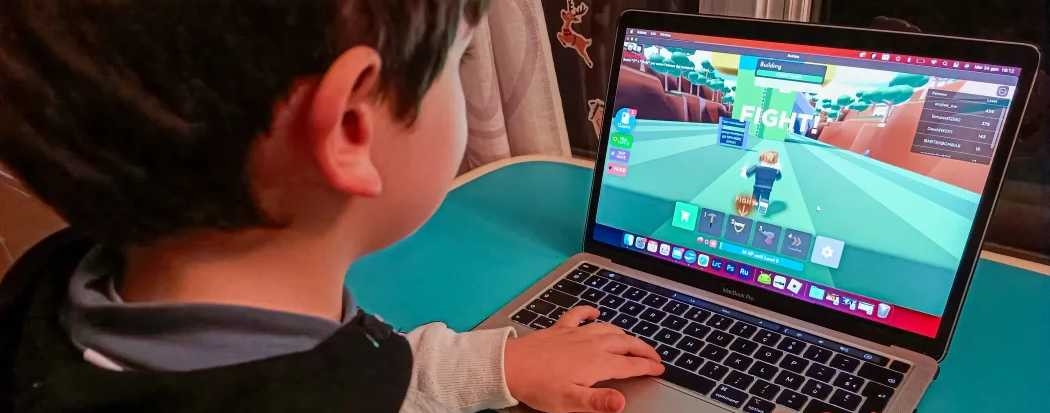
Industry statistics and independent research indicate that more than 40% of Roblox's daily active users are under the age of 13, with a substantial subset aged 8–12. Multiple surveys show that children in this age group spend between 2 and 3.5 hours per day on Roblox during school days, with weekend usage often exceeding 5 hours per day.
Practical recommendations for Parents
-
Roblox parental protection must be approached as a continuous security process, not a one-time setup. Parents should treat the platform similarly to any online service handling sensitive personal data and financial transactions.
-
Roblox's built-in parental control feature should be fully enabled and protected with a strong parental PIN. Communication settings must be restricted based on the child's age, with private messaging and invitations limited to known contacts or disabled entirely for younger users. Spending limits should be enforced at the platform level to prevent impulsive or unauthorized purchases.
-
Account security must be strengthened through strong, unique passwords and mandatory two-step verification. Recovery email addresses and phone numbers should always remain under parental control. These measures significantly reduce the risk of phishing-driven account takeovers, which remain one of the most common attack vectors targeting children.
-
Parents should regularly review friend lists in Roblox, gameplay history, and transaction records. Sudden behavioral changes, secrecy, or emotional distress may indicate exposure to harmful interactions. Periodic co-play or observation sessions help normalize communication about online experiences and lower the barrier for children to report concerns.
-
Children must be educated about manipulation tactics used online. They should clearly understand why sharing personal information is dangerous, why offers of gifts or free virtual currency are often scams, and why moving conversations outside the platform increases risk. Education reinforces technical controls and builds long-term resilience.
-
Spending controls should be treated as a safety feature, not a punishment. Using low-limit payment methods, disabling stored cards, and enabling purchase notifications prevent financial abuse.
-
Parental control settings should be revisited periodically as children grow older. Risk exposure changes with age, social behavior, and technical confidence. Regular reassessment ensures that protections remain proportionate and effective.
Account settings
Effective protection on Roblox requires a layered approach that combines technical configuration, behavioral education, and continuous oversight. No single control is sufficient on its own.
1. Configure Roblox Parental Controls function correctly
- Log in to the child's Roblox account.
- Navigate to
Settings → Parental Controls. - Set a Parental PIN to prevent unauthorized changes.
- Enable Account Restrictions appropriate to the child's age.
- Limit who can message the child, invite them to private servers, or interact in experiences.
- Set monthly spending limits or disable purchases entirely.
Parental controls are the first barrier against unsolicited contact, grooming attempts, and financial abuse. Many documented incidents occur simply because these settings were never enabled or reviewed. Proper configuration significantly reduces exposure to high-risk interactions.
2. Secure the account with strong authentication
- Go to
Settings → Security. - Enable Two-Step Verification for login and settings changes.
- Ensure the recovery email and phone number are controlled by a parent.
- Use a strong, unique password not reused on other platforms.
Most account compromises on Roblox occur through phishing, not technical exploits. Two-step verification dramatically reduces the success rate of these attacks and prevents minor mistakes from escalating into major incidents.
3. Monitor activity and behavioral changes
- Regularly review friend lists and recently played games.
- Check transaction history and virtual currency balances.
- Pay attention to changes in mood, secrecy, or withdrawal.
- Occasionally play or observe gameplay together.
Harmful interactions often develop gradually. Early detection of unusual patterns allows intervention before serious harm occurs. Visible parental interest also increases the likelihood that children will report uncomfortable experiences.
4. Educate children about online manipulation
- Explain why strangers may pretend to be friendly.
- Teach children never to share personal details.
- Make it clear that moving conversations off Roblox is dangerous.
- Reinforce that gifts and promises can be manipulation tactics.
Technical controls cannot replace awareness. Children who understand why rules exist are more resilient to social engineering and peer pressure.
5. Control spending and financial exposure
- Disable saved payment methods.
- Require parental approval for all purchases.
- Use low-limit payment options.
- Review spending reports regularly.
Children often struggle to associate virtual currency with real money. Clear financial boundaries prevent impulsive spending and exploitation.
6. Revisit settings as children grow
- Reassess privacy and communication settings every few months.
- Adjust controls based on maturity and behavior.
- Keep rules consistent but adaptable.
Children's risk profiles change with age. Controls that are appropriate at age 8 may be insufficient at age 12. Regular review ensures protection remains aligned with real-world exposure.
Conclusion
Roblox in 2026 illustrates both the promise and the danger of modern digital platforms. It offers creativity, collaboration, and learning opportunities, but it also exposes children to complex social, financial, and data-driven risks that were unheard of a decade ago. These risks do not stem from a single vulnerability; they emerge from the interaction of technology, economics, and human behavior over time.
Protecting children on Roblox does not require eliminating the platform or instilling fear. It requires informed engagement, proper configuration, and continuous dialogue. When parents apply layered safeguards and maintain active involvement, Roblox can be made significantly safer. Without that involvement, the platform's risks compound silently.






.png)